Winter break math, sized to the break itself
Every teacher knows the January feeling. You spent the fall building something: multiplication facts in 3rd grade, long division in 4th, decimals in 5th. Then two weeks of cookies and cousins go by, and the class that walked out fluent in December walks back in acting like October never happened. The first week of January quietly becomes a reteaching week, every single year.
The fix is not a giant holiday workbook. It is the smallest routine that works: one sheet of familiar math a day, for the ten weekdays of break, checked off by the kid on a tracker page. I built my winter break line around that routine, one packet per grade from Kindergarten through 5th, and this page is the tour.
Why ten days beats thirty pages
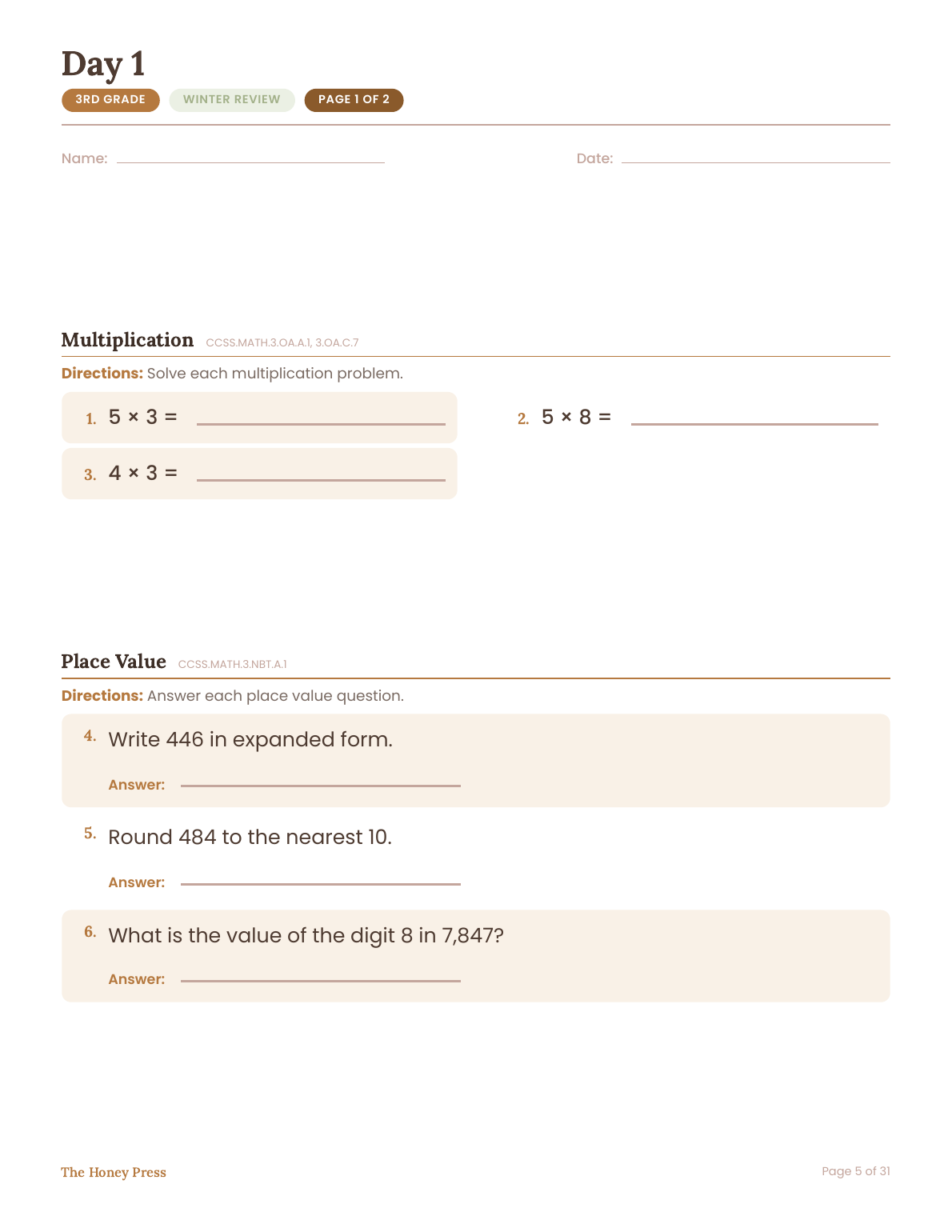
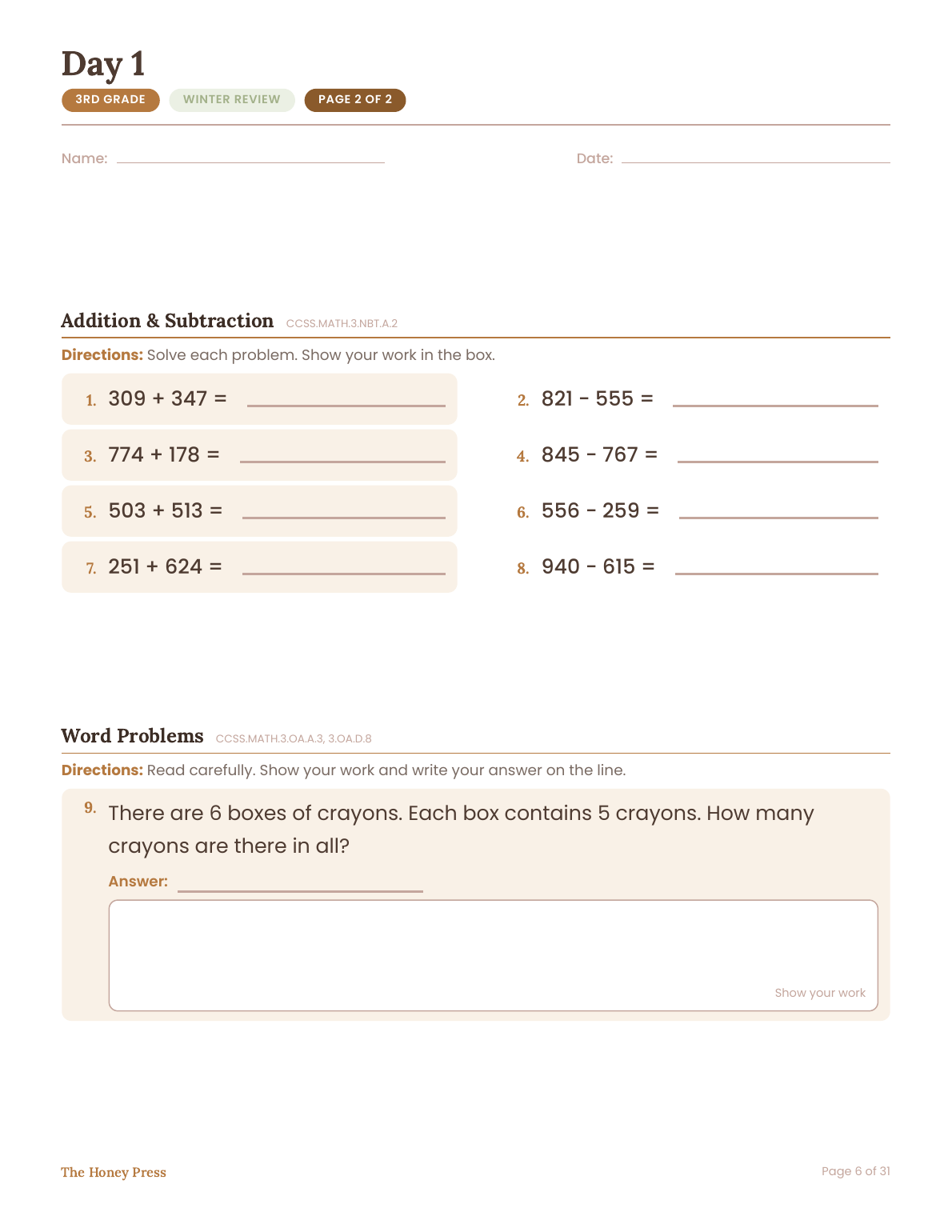
The winter packets that fail all fail the same way: they are too big. A thick December packet signals to families that this is a project, projects get postponed, and postponed projects come back half blank. So each of these packets holds exactly ten daily sheets, front and back, ten to fifteen minutes each. That is the whole ask.
- Ten days matches the actual break, so finishing is realistic instead of theoretical.
- Every page is first-semester review only. Nothing new, so no adult has to teach on vacation and no child is stuck waiting for help.
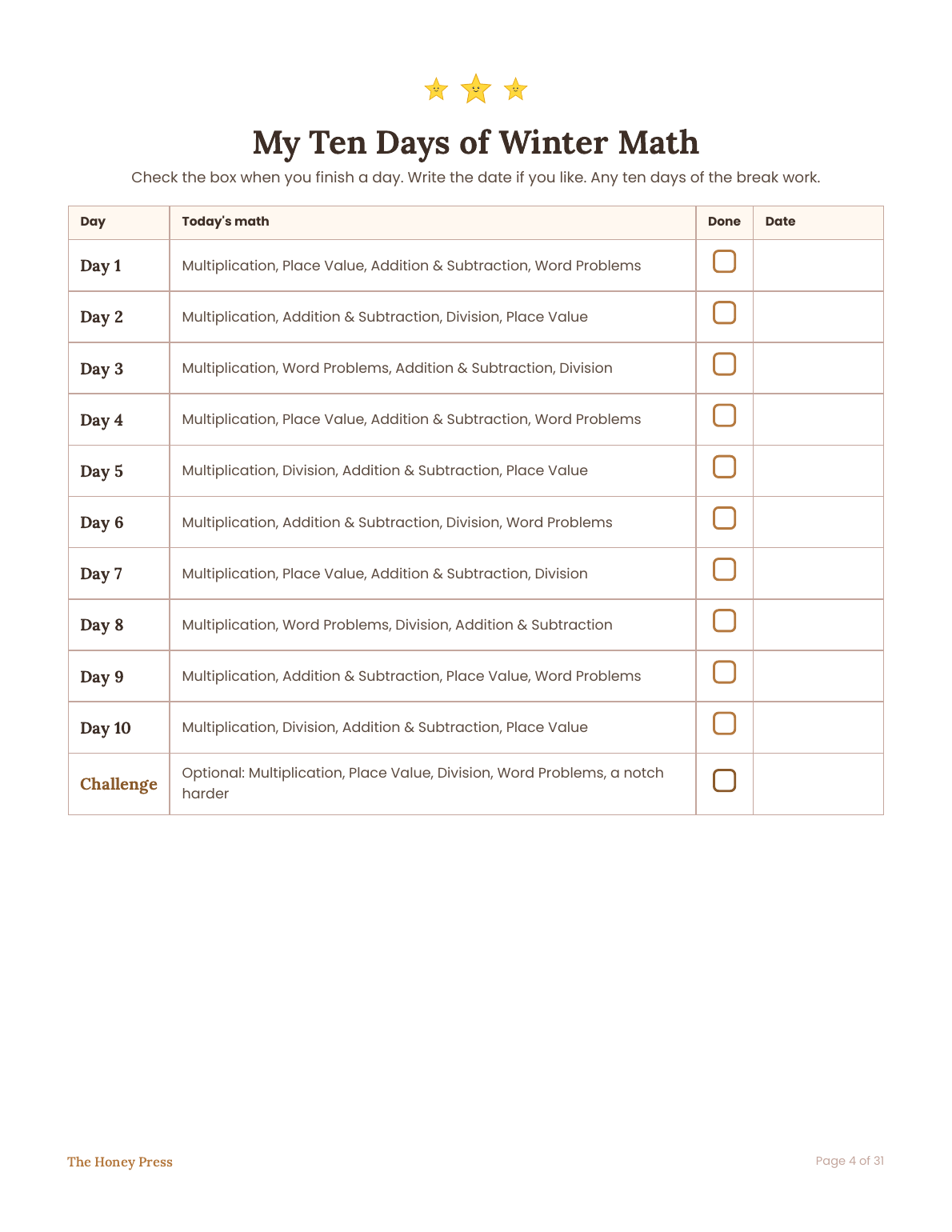
- One sheet a day builds the habit. The tracker page turns it into a small ritual: do the sheet, check the box. Kids police it themselves.
- An optional Challenge Day waits at the end, a notch harder, for the student who finishes day ten and asks for more.
Built to be sent home, not just printed
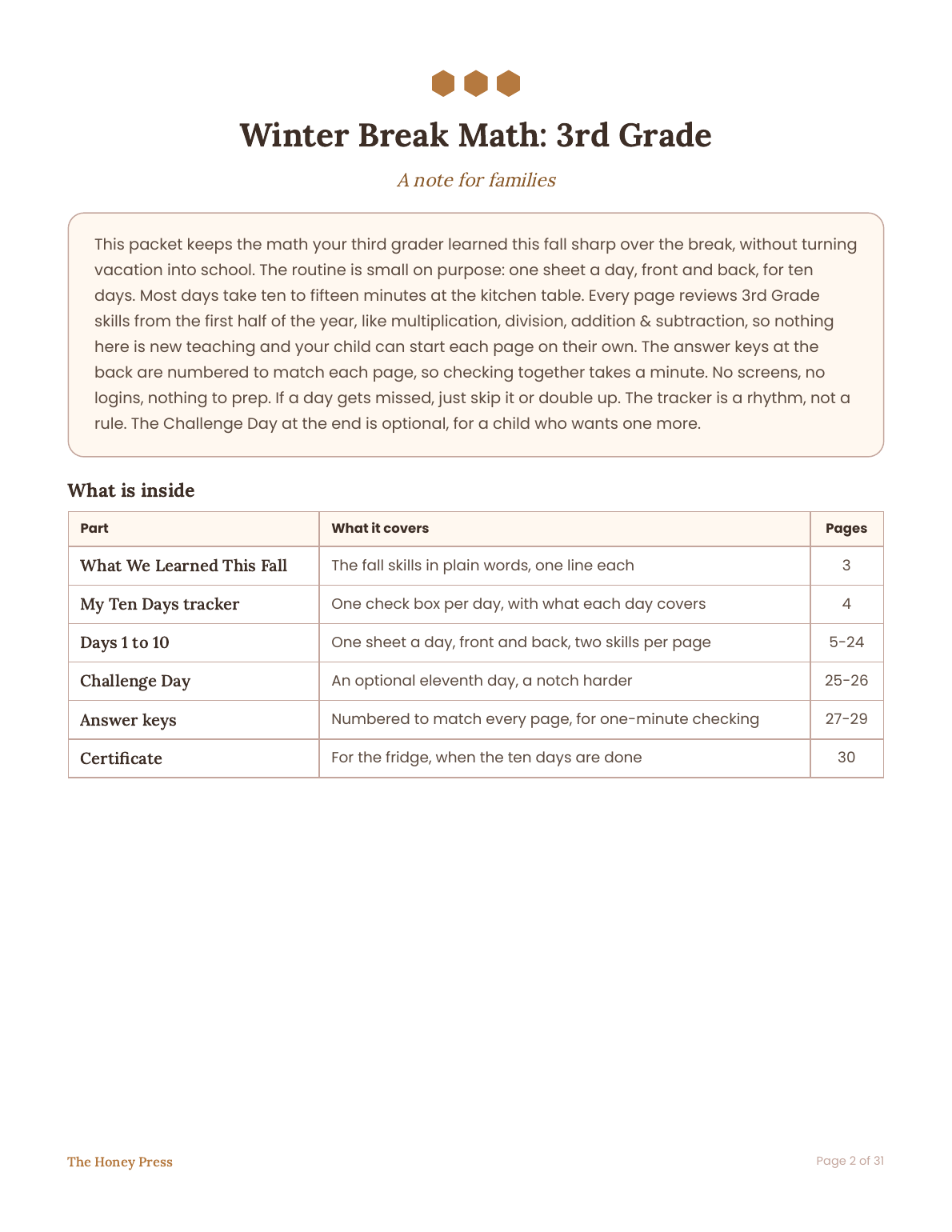
A break packet lives or dies at the kitchen table, with an adult who has not seen a math classroom in twenty years. So every packet opens with a one-page Note for Families that explains the routine in plain words: one sheet a day, ten to fifteen minutes, keys in the back, no screens, nothing to prep. A second page translates each fall skill into parent language, so "place value" actually means something at home. And the answer keys are numbered by page, so checking day four takes a minute, not an argument.
For you, the prep is one trip to the copier on the last week of the semester. Hand the packets out before the final bell, and spend January teaching instead of reteaching.
What each grade reviews
Each packet reviews its own grade's first semester, which is why there is one per grade rather than a generic "elementary" file:
- Kindergarten (31 pages): counting, number recognition, comparing, beginning addition and subtraction.
- 1st grade (33 pages): addition and subtraction within 20, place value, number patterns.
- 2nd grade (33 pages): two-digit addition and subtraction, place value, skip counting, money.
- 3rd grade (31 pages): multiplication and division facts, place value, rounding, addition and subtraction.
- 4th grade (31 pages): multi-digit multiplication, division, place value, factors and patterns.
- 5th grade (32 pages): decimals, multiplication and division, place value, order of operations.
The winter packets and bundles
Singles are $6.95 per grade. The two bundles carry three grades each at $14.95: the three upper-grade packets bought separately come to $20.85, so the bundle is the version I point teams toward, and it means the whole hallway goes home with the same routine.
See inside before you buy
These are real pages from the 3rd grade packet, exactly as they print: the family note, the tracker, and the first daily sheet.
Tap or click the page to flip through. Arrow keys work too.
What happens in January
The packet hands its baton to two other routines on this site. The first is the mid-year reset: four structured January weeks of spiral review that rebuild the fall semester in class, for the students whose packets stayed in the backpack. The second is weekly homework, the same one-sheet habit stretched across all 36 weeks of the year. Classes already running weekly homework take to the winter packet instantly, because to them it is not a holiday project. It is just the normal sheet, at home, with hot chocolate.
Frequently asked questions
How much math is a winter break packet per day?
One sheet, front and back, about ten to fifteen minutes at the kitchen table. Ten sheets cover the break, and a tracker page lets kids check off each finished day. An optional Challenge Day sits at the end for students who want an eleventh, slightly harder sheet.
Do parents have to teach anything over break?
No, and that is the design rule behind every page. The packets review first-semester skills only, so nothing inside is new teaching. A one-page Note for Families explains the routine in plain words, a second page translates each skill into parent language, and page-numbered answer keys in the back let any adult check the work.
Why ten days instead of a page for every day of December?
Because ten days is roughly what winter break actually is, and a packet sized to the break is a packet that gets finished. Thirty pages of holiday math looks impressive in a teacher newsletter and comes back in January with six pages done. Ten sheets, one a day, comes back complete.
When should I send the packet home?
The last school day before break, with the family note on top. Print one packet per student, single-sided or double-sided both work, and spend zero minutes explaining it: the note does that job. In January, collect the tracker pages and you can see at a glance who kept the routine.